This little church mouse sure can. Shakers are an integral part of my instrument collection because not only do they sound great, but they are colorful and easy to play. I often incorporate them into the songs I write — particularly those targeting movements and following directions — for those same reasons.
“Surely You Can Shake It” is new to the Listen & Learn collection. The song combines several goals, including shaking up high, down low, slowly, and quickly.
Surely you can shake it down low,
And surely you can shake it up high.
Surely you can shake it ‘round and ‘round,
But can you make that shakin’ sound?
Surely you can shake it down low,
And surely you can shake it up high.
Surely you can shake it ‘round and ‘round,
And you can make that shakin’ sound!
It’s fun to hear my students make (or at least, attempt to make) the “ch” sound along with me. An easy way to target other speech sounds would be to change “ch” to “shh”, “sss” or just about any other syllable. If you haven’t already noticed, I’m a big fan of using a single song to address multiple goals!
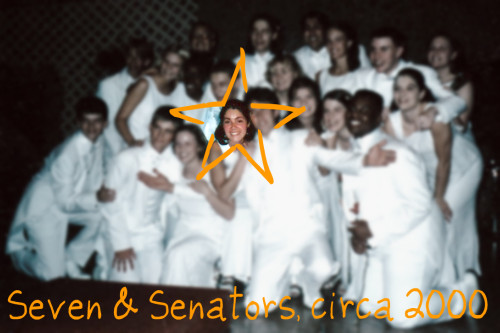
My former high school’s show choir is coming to perform for my students today. I was a member of Seven & Senators at Springfield High School from 1998-2001, and can’t wait to see and hear how the group has evolved over the last ten years.
I wrote about my show choir experience (which is probably the reason that I am a total Gleek) last year, but think it’s worth bringing up again…this time, in relation to my career. Because as far-fetched as it might sound, those three years in Seven & Senators actually helped prepare me for life as a music therapist:
I gained an appreciation for all genres of music. We performed Broadway, golden oldies, love songs, classic rock, jazz, and just about everything else under the sun. Now there’s a special place in my heart for “Blue Skies”, “Bill Bailey”, and lots of other music therapy standards.
I got experience singing in front of audiences of all ages and abilities. Every year, we made the rounds at elementary schools, nursing homes, hospitals, and facilities like The Hope Institute (where I work now). I always enjoyed talking with the students and residents and brightening their day with our performances.
I learned how to improvise. Both vocally, and otherwise! Reinterpreting choreography when my dance partner was MIA, riffing with the audience when our sound system failed us, and creatively solving various other issues were par for the course as a member of show choir.
I taught myself how to memorize at lightning speed. Not only did my brain have to remember all of the music we sang, but it also had to remember countless dance steps, positions, and song order. Now, working with children, I memorize all of the music I use in music therapy sessions so that I can focus on my students — not the lyrics or chords. All that memorizing I did back in the day has served me well.
I bonded with others through music. We all know that the therapeutic relationship is a crucial aspect of music therapy. There’s something about music that speeds up a budding friendship, as I realized early on being involved in show choir and musical theatre. And though my clients aren’t necessarily my friends, our relationship is strong because of the music that we make together.
I’m sure there are other ways in which show choir helped shape me into the music therapist I am today. It’s so cool to look back at my past and realize how all the dots connect perfectly. What about you? Did your past experiences (show choir or otherwise) prepare you for your current career?
Each morning as I decide what to wear, a few thoughts go through my head: what’s the weather like? Do I have any floor groups today? Am I going to be lugging instruments and equipment around?
As a music therapist, my job duties and work environment changes on a daily basis depending on which clients I’m seeing and in which setting I’ll be seeing them. I spend most days in multiple settings, going straight from my job at a school (where I need to adhere to a certain dress code) to my private practice (where I can keep my outfit a little more casual). So the key is finding a good balance.
There is a list of rules I follow during the school year that make getting dressed a little easier, no matter what I’ll be doing on any given day. Here are some things I stay away from:
open-toed shoes
uncomfortable heels
short skirts
shirts that are too short
pants that are too low
sleeves that don’t let me lift my arms easily
overstated jewelry
In other words, I pretty much stick to the basics. My wardrobe feels pretty boring at times, but it’s better than being uncomfortable!
In the summer I can be a little more lax, since I work mainly in my home studio and don’t have to do any hauling or walking around. I still need to look professional enough, but I want my students and parents (who most often are dressed down during the warmer months) to feel comfortable and “at home” in my studio.
There’s so much more you have to take into consideration when you spend your days with children. What rules — whether your own or a strict dress code — do you follow when you get dressed for work?
I discovered this song during an iTunes search a few years ago, and now it’s a spring staple. Bobs & LoLo are awesome — if you’re not familiar with their music, I highly suggest checking them out.
This past summer, I connected with Bobs & LoLo via Facebook and Twitter. When they heard that I had released a new album, they offered to do a CD swap with me. So they sent me a copy of Action Packed, and I sent them a copy of Time to Sing Hello.
My students and I have been jamming out to my rendition of “Raindrop Pop” over the last few days, and will probably continue doing so throughout the rest of this rainy spring month!
There are a few people on the internet who I look up to immensely. Chris Guillebeau is one of them, which I’ve mentioned here before. All of my music therapy blogger friends fall into that category, as well. But before I discovered Chris, or met any of those music therapists, there was Hugh MacLeod.
Back in 2008, just prior to starting Listen & Learn, I came across an article on the internet called How To Be Creative. It inspired me so much that I printed it out, and then read it over and over again. I didn’t pay much attention to who wrote it, or where it came from, until I stumbled upon a book called Ignore Everybody at Barnes & Noble a year and a half later.
The best-selling book was based on that article, and the author was Hugh MacLeod, whose blog contains tons of other great articles and cartoons about marketing, social media, and being creative. Needless to say, I subscribed to his daily cartoon newsletter and added his blog to my Google Reader immediately.
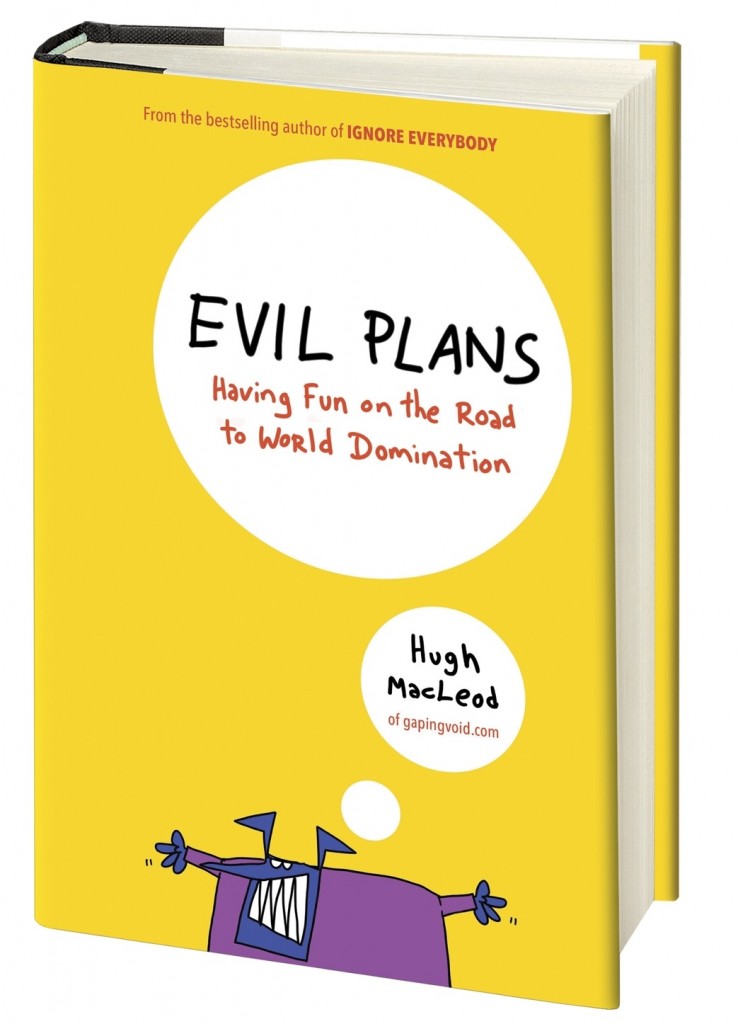
Hugh’s latest book is called Evil Plans, a term which he defines as “a crazy, out-there idea that allows you to ACTUALLY start doing something you love, doing something that matters.” This is a book you open at 11 pm, tell yourself you’ll read one chapter before bed, and then before you know it, you’ve read five and don’t want to put it down. It’s inspiring, funny, and brutally honest.
Hugh says that everyone should have an evil plan. What’s yours?
(And yes…I have one. A few, actually. I promise I’ll spill the beans soon!)
Welcome! I’m Rachel Rambach, board-certified music therapist and creator of Listen & Learn Music — educational songs and musical materials for children. I love sharing my work with you, along with my behind-the-scenes creative process, adventures in business ownership, and life as a mom of two.
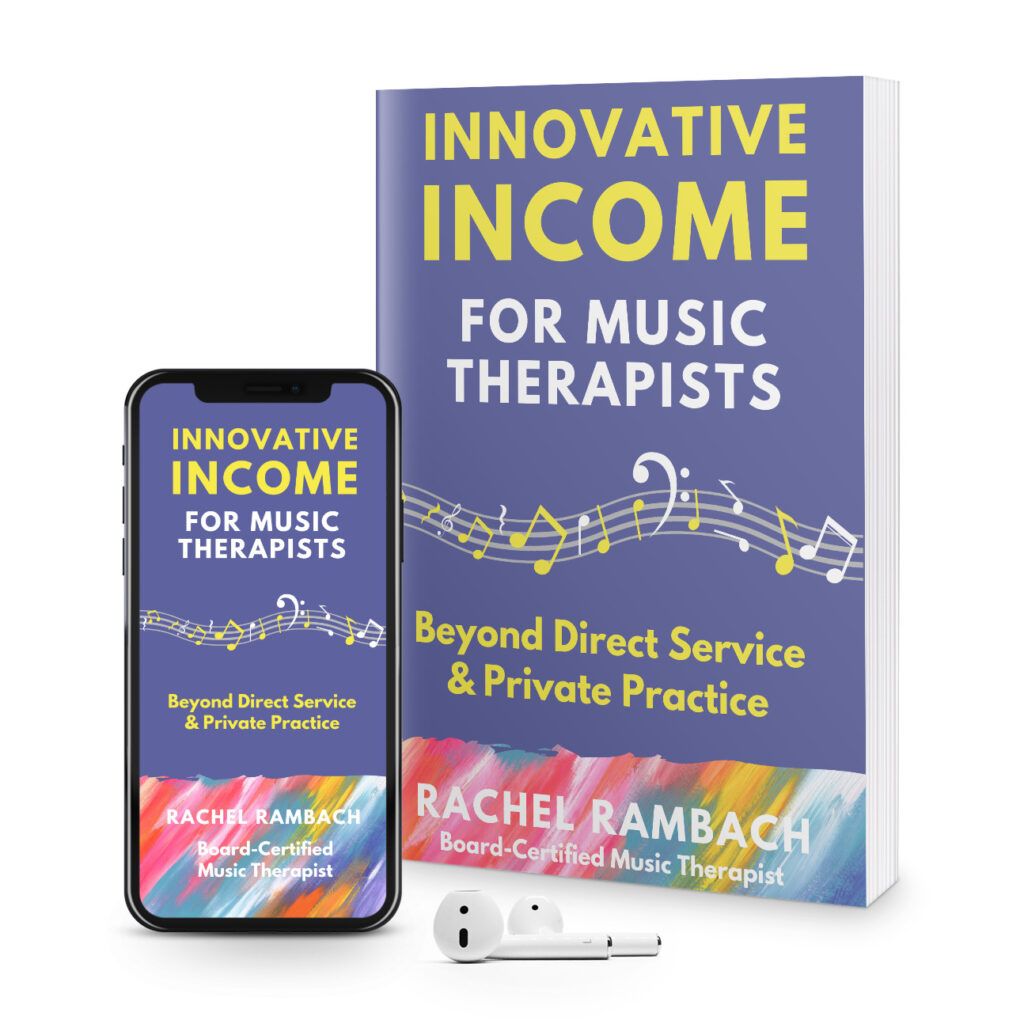
My Book + Course
This is the book + course that will help you shape your music therapy career in order to make more money and live your ideal lifestyle. Details here.